
Pioneering refit ensures Reef Ranger is low-emission, high-efficiency
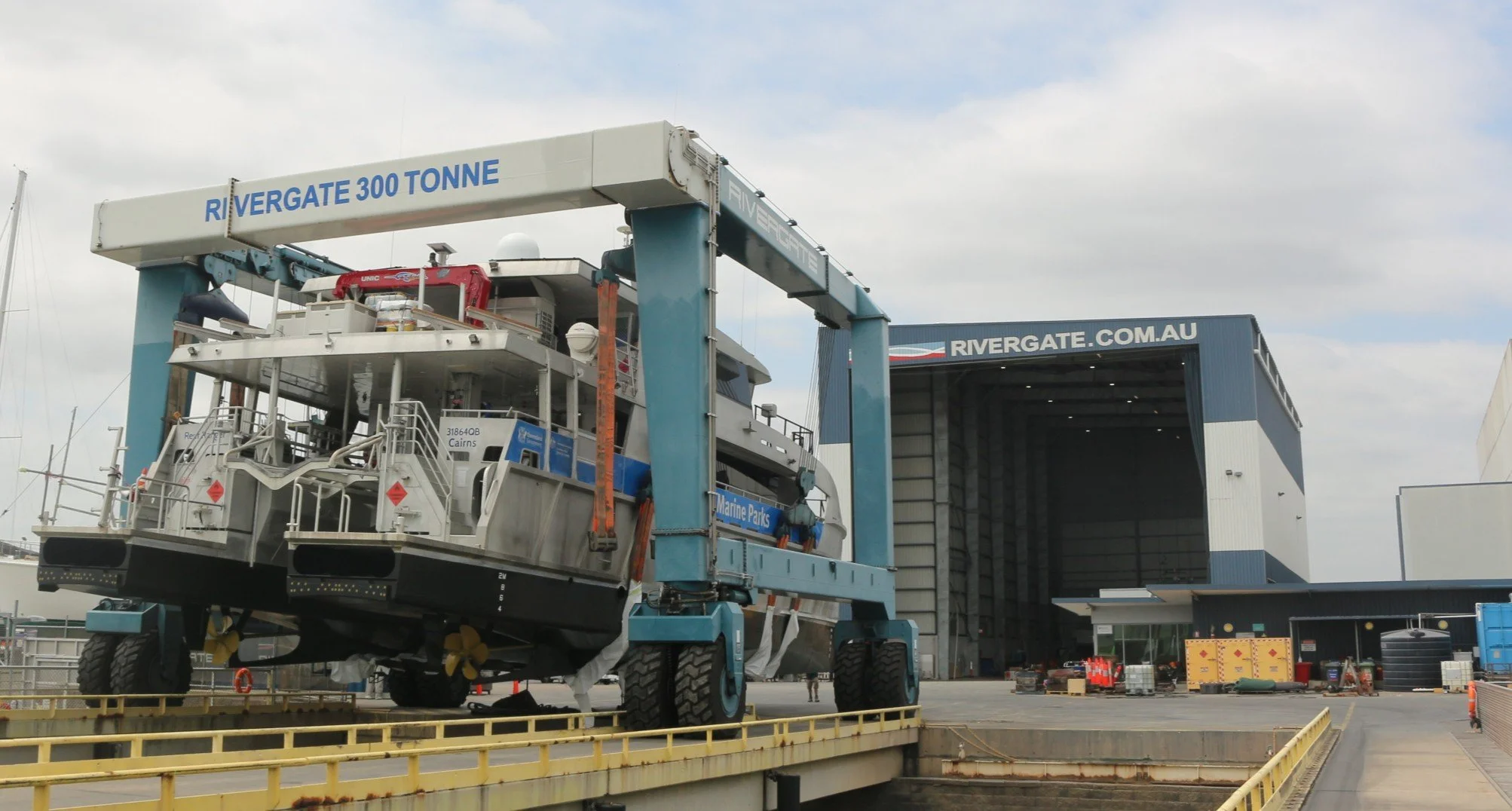
A uniquely complex refit, and the first of its kind in Australia, was recently undertaken at Rivergate Marina & Shipyard, transforming the 24-metre aluminium catamaran Reef Ranger into a leaner, greener marine environment protection vessel.
Reef Ranger, which operates within the Reef Joint Field Management Program, funded 50/50 between Queensland and Commonwealth Governments and is designed as a floating ranger base. It was built on the Gold Coast and launched in 2014.
Based in Cairns, the vessel has served for the past 11 years carrying out monitoring and surveying activities and responding to incidents in the 348,000-square-kilometre Great Barrier Reef World Heritage Area.
Rivergate Project Manager, Angus Patterson, and General Manager, Andrew Cannon, travelled to Cairns with trades and contractors from Rivergate to discuss the scope of works prior to the tender submission.
Rivergate was awarded the contract after submitting its credentials and solution via a competitive tender process. A key part of the submission included demonstrated previous experience on projects such as the Queensland Police Service (QPS) Series 2 patrol boat construction, Series 1 Life extension, and FPV KI Ross patrol vessel half-life extension. Prior to this major project, Reef Ranger had undergone two refits at Rivergate.
“This was a major refit with the focus on transforming the vessel with green initiatives around the power systems onboard to make it a more sustainable vessel.”
The scope of works included the installation of a custom hybrid system that would allow the vessel to switch from the new solar array and onboard energy storage system and the traditional generator onboard, which manages the automatic switching between the two as necessary.
In addition, the team applied a new silicon-based anti-foul system, which is hydrophobic and produces a smooth surface making it harder for marine organisms to attach to the coated substrate. Checking over traditional survey requirements was also part of the brief.
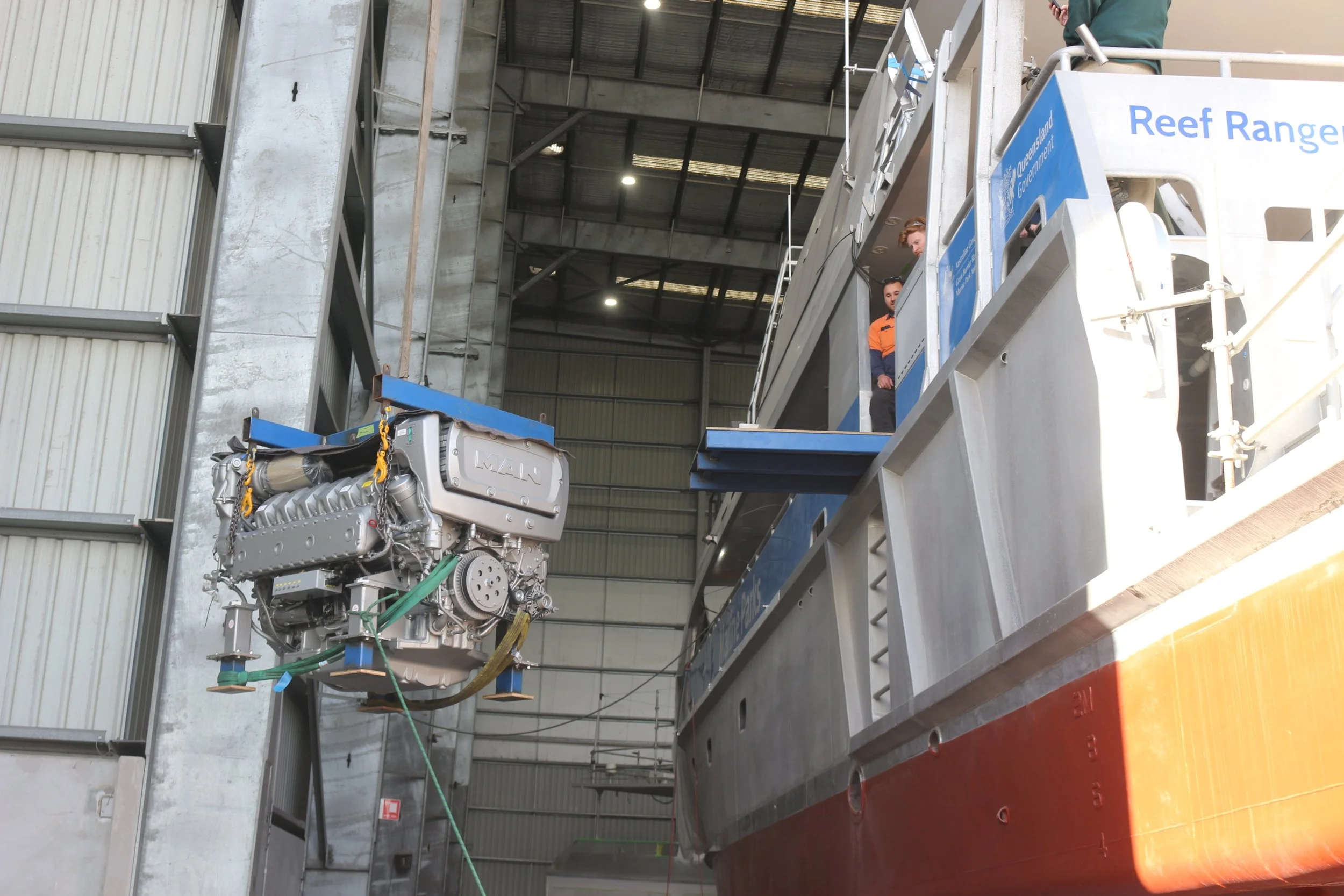
As Andrew explained, “The newly installed MAN engines and exhaust aftertreatment system ensure Euro V compliant emission levels for workboats. This is an Australian first installation which required a complete redesign and installation of the engine room.”
The new systems installed contribute to reducing environmental impact while allowing the boat to continue its primary job of protection, monitoring and research on the Great Barrier Reef.
The MAN exhaust gas aftertreatment system (EGA) is light and low maintenance, and ideal for “space critical situations” on work boats of Reef Ranger’s calibre.
At the heart of the EGA is a Selective Catalytic Reduction (SCR) catalytic converter, which reduces the nitrogen oxides (NOx) in the exhaust gases. A 32.5 percent urea solution (AdBlue©) is metered into an SCR mixer and continuously injected directly into the exhaust tract. There, the solution reacts with the nitrogen oxides and converts them into water (H2O) and harmless nitrogen (N2).
“This was a complex project, considering that the new hardware installed was an Australian first and that the original engine room cavities were designed for a completely different set of hardware,” Andrew stated.
“The exhaust arrangement, in particular, took a substantial amount of re-design to ensure it would be effective within the confines of the engine space.”
Reef Ranger’s six-month refit was carried out with extensive re-designs and scheduling of contractors, which was managed by Angus and Andrew.
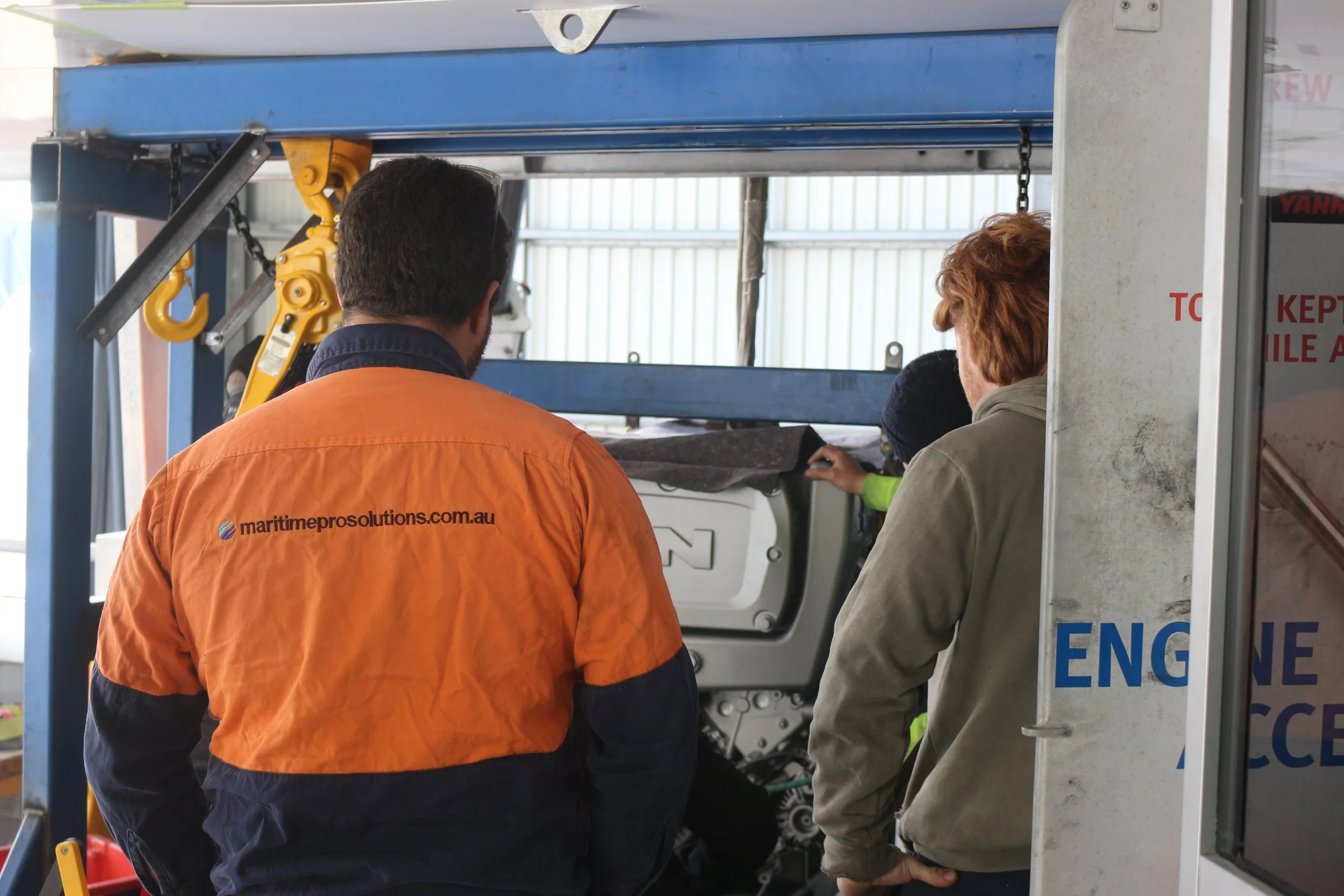
“Our Project Management experience meant we were able to work with our reliable network of specialist trades on-site and contractors drawn from South-East Queensland, which ensured a smooth process,” Andrew stated.
“Our ability to collaborate, share knowledge and problem-solve during the refit meant Reef Ranger was back on the water and equipped for its next decade of service on the Great Barrier Reef.”
Feedback from the Reef Ranger crew “The vessel is quieter, smoother and more fuel efficient than before. The onboard power generation system has proven to provide fuel saving and increased the amenity onboard the vessel with early indications that the generators only run about 50 percent of the time.”